Wide-band Clownfish
Amphiprion latezonatus
Lord Howe Endemic • Captive Bred
Rarity
Rare
The Wide-band Clownfish, also known as the Wide-band Anemonefish, is a rare and distinctive species characterized by its very broad white vertical bars and dark reddish-brown to blackish body. It is one of the largest clownfish and is highly sought after for its unique “wide-band” patterning. Endemic to the subtropical waters around Lord Howe Island and nearby regions, this bold clownfish is a prized addition to any serious breeding program or reef aquarium. Captive-bred specimens are hardy, active, and visually striking.
General Description
| Common Name | Wide-band Clownfish |
| Latin Name | Amphiprion latezonatus |
| MBI Status | ✔ Captive Breeding |
| WORMS | 🌊 World Register of Marine Species |
| Wikipedia | 📖 View full article |
| Adult Size | Up to 14 cm (5.5 in) |
| Minimum Tank Size | 40–50 gallons (recommended) |
| Host Anemones |
|
| Natural Habitat | Subtropical rocky reefs and lagoons around Lord Howe Island and eastern Australia (depth 5–30 m). |
| Origin / Range | Southwest Pacific — endemic to Lord Howe Island region and nearby subtropical waters |
| Rarity | Rare • Limited natural range |
| Care Level | Intermediate • Hardy & Semi-Aggressive |
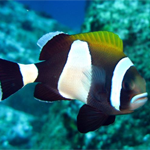
Wide-band Clownfish • Captive Bred
RARE • CAPTIVE BRED • BREEDING PROGRAM STOCK
Conservation Status: Not evaluated by IUCN Red List (rare due to limited range)
Pomacentridae Family
Lord Howe Island Endemic Region
Breeding Program Stock